The Gem in the Darkness
Chapter 1: The Invisible Daughter
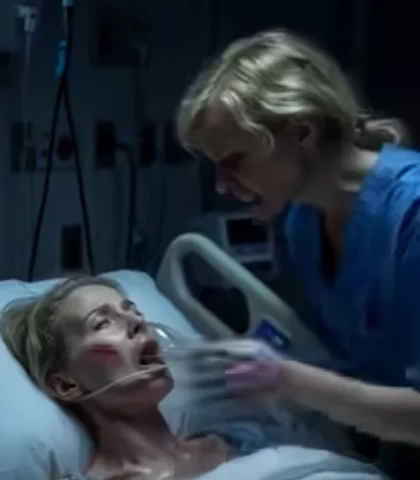
I was drowning in my own lungs when my sister ripped the oxygen tube from my face.
“Stop faking it,” Hannah hissed, her perfectly manicured nails scratching my cheek as she yanked. “You just want pity.”
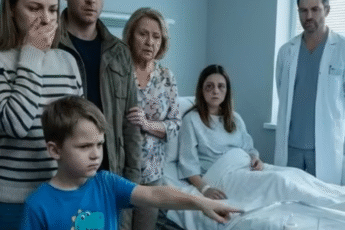
The air vanished instantly. My chest collapsed inward like a crushed soda can. I clawed at the empty space where the cannula had been, my vision swimming with black spots. My throat made sounds I didn’t recognize—desperate, animal gasps that echoed off the sterile hospital walls.
My parents stood three feet away. They said nothing.
My mother crossed her arms, her expression one of mild annoyance, like I had spilled juice on a new rug. My father looked at his phone, scrolling through emails.
I reached toward them, my hand trembling, begging without words. Help me. Please. I’m your daughter too.
Hannah rolled her eyes, turning to them with a dramatic sigh. “See? She’s fine. Just dramatic as always.”
What none of them knew—what would unravel everything they believed about our family—was that someone was standing right behind them in the doorway. And two weeks later, at our grandfather’s will reading, that man would place his hand on my sister’s shoulder and speak six words that destroyed her entire world.
Have you ever been invisible to the people who were supposed to love you most?
My name is April Warren. I’m thirty-five years old, a healthcare consultant who helps hospitals streamline their operations to save millions. I’ve built a successful career in Denver, own my own condo overlooking the Rockies, and manage my chronic lung disease with careful discipline. None of my family knows any of this because none of them have ever thought to ask.
I grew up as the ghost in a family that only had eyes for my younger sister. From the time I was eight years old and Hannah was two, I learned that my role was to be strong, self-sufficient, and undemanding. Hannah was delicate. Hannah needed extra attention. Hannah required protection from a world that might bruise her precious feelings. I was expected to handle whatever life threw at me without complaint because that’s what big sisters do.
Grandfather Charles was the only exception. When I was twelve, he found me crying behind his tool shed after my parents forgot my birthday for Hannah’s dance recital. He knelt down, wiped my tears with his calloused hands, and said something I’ve carried with me ever since.
“April, you are a gem hidden in darkness. One day, the light will find you.”
I didn’t fully understand what he meant then. I think I’m only beginning to understand now.
Chapter 2: The Funeral Performance
When Grandfather died two weeks ago, I drove four hours from Denver to Colorado Springs. I stood in the back of the church while Hannah sobbed dramatically in the front pew, surrounded by relatives offering tissues and sympathetic embraces. My mother announced to everyone that Hannah had been such a comfort to Dad in his final days, while I had been “too busy with work” to visit.
The truth was that no one had told me Grandfather was declining until three days before he passed. By the time I arrived, he was already gone.
After the service, Hannah cornered me near the coat closet. Her eyes were completely dry despite the performance she’d given minutes earlier. She leaned close, her perfume overwhelming, and whispered with a smile that didn’t reach her eyes.
“Grandfather left everything to me, April. The house, the investments, everything. You should get used to that.” She patted my cheek like I was a child. “Some of us were actually there for him.”
I wanted to scream. I wanted to tell her that I’d called Grandfather every Sunday for fifteen years. That we’d talked about books and history and the meaning of life while she was too busy posting photos of herself online. But I said nothing. I never did. That was my role.
The stress of the funeral, the grief, the altitude change—my lungs couldn’t handle it. That night, I woke at 2:00 A.M., unable to breathe. My chest felt tight, as if someone had wrapped iron bands around my ribs. I called 9-1-1 and was rushed to St. Mary’s Hospital, where doctors admitted me to the ICU and connected me to high-flow oxygen.
When my family arrived the next morning, I expected concern. What I received was irritation.
“April, you always make everything complicated,” my mother said, standing at the foot of my bed. “We have the will reading to handle. Your father has to arrange the estate paperwork.”
Hannah examined her manicure. “She’s probably faking it anyway. She always did love attention.”
I tried to explain that COPD wasn’t something you could fake, that my oxygen levels had dropped dangerously low. But my mother just sighed and said they’d be back later, after they handled “more pressing matters.”
It was Hannah who stayed behind. She said she’d keep me company. But the moment our parents disappeared down the hallway, her expression changed. She glanced toward the door, confirming we were alone.
That’s when she ripped the breathing tube from my face.
And that’s when the door opened behind her.
Chapter 3: The Witness
Dr. Marcus Keller stood in the doorway, his face unreadable as he watched my sister step back from my bed. He moved quickly, reattaching my oxygen, checking my vitals, his hands steady and professional. But when he turned to Hannah, his voice was cold as steel.
“What did you just do?”
Hannah stammered something about the tube being loose, but I saw something flicker in Dr. Keller’s eyes. Something that told me this wasn’t the first time he’d witnessed cruelty in this family.
Dr. Keller ordered Hannah to leave immediately. She protested, claimed it was a misunderstanding, said the tube had simply come loose. But Keller’s expression remained stone cold. Eventually, Hannah grabbed her purse and stormed out, muttering about ungrateful sisters and wasted time.
I lay there trembling, my throat raw, my mind racing with questions I couldn’t form into words. Keller checked my vitals twice, adjusted my oxygen flow, and told me to rest. But rest felt impossible when the person who was supposed to be my sister had just tried to suffocate me.
The next morning, after the doctors completed their rounds and my family sent word they were “too busy with estate matters” to visit, Keller returned to my room. He pulled a chair close to my bed and sat down with the weariness of someone carrying a heavy burden.
He asked how I was feeling. I told him the truth: physically I was recovering, emotionally I was shattered. He nodded slowly, as if he understood more than I realized.
Then he said something that changed everything.
He told me that meeting me here was not a coincidence. He had known my grandfather, Charles Warren, for five years. Charles had been his patient, coming in regularly for heart checkups and eventually for the surgery that was supposed to give him more time. During those years, they had talked about many things: family regrets, the people Charles loved, and the people who worried him.
My name came up often.
I stared at him, unable to process what I was hearing.
Keller continued. He said that three years ago, during one of their appointments, Charles had made an unusual request. He asked Keller to watch over me if I ever ended up at St. Mary’s. Charles knew about my lung condition. He knew that Colorado Springs was my hometown, that I might return someday and need medical care here. He wanted someone on my side.
Keller remembered exactly what Charles had said: “April is the granddaughter my family forgot. She has no one in her corner. If anything ever happens to her, please be there.”
Keller had promised, never expecting the day would actually come until last week when he saw my name on the admission list.
I couldn’t speak. My grandfather had thought of me. He had planned for me. He had asked a stranger to protect me because he knew my own family wouldn’t.
Keller reached into his coat and pulled out a folder. He said Charles had given this to him six months ago with instructions to pass it to me when the time was right.
Inside were newspaper clippings, printed articles, pages from industry publications. All of them were about me. One article described how my consulting work had helped Denver Memorial Hospital avoid a financial collapse three years ago. Another featured an interview where I discussed efficiency strategies for struggling medical centers. There were dozens of pieces spanning nearly a decade of my career.
In the margins, in handwriting I recognized from birthday cards long ago, my grandfather had written notes:
My granddaughter did this.
So proud of her.
She built this life completely on her own.
The tears came before I could stop them. For thirty-five years, I believed no one in my family saw me. I believed I was invisible, forgettable, unworthy of attention or pride. But Grandfather had been watching all along. He had collected evidence of my achievements like precious treasures. He had carried my successes in his heart, even when he couldn’t tell me directly.
The realization broke something open inside me. Something that had been locked away for decades.
Keller gave me a moment to compose myself. Then his expression grew serious again. He said there was more I needed to know. Charles had confided in him about Hannah as well. And the picture was not pretty.
My sister had made some terrible financial decisions two years ago. She had invested heavily in a business venture that collapsed completely, leaving her with nearly $200,000 in debt. She had hidden it from everyone, maintaining her lifestyle with credit cards and borrowed money, sinking deeper every month.
Charles discovered the truth when creditors started calling his house looking for her. Hannah saw the inheritance as her only way out. She needed that money desperately. She needed it so badly that she would do almost anything to make sure she got it.
Suddenly, Hannah’s behavior made a different kind of sense. The cruelty wasn’t just sibling rivalry or jealousy; it was desperation. She was a drowning woman grasping at anything that might save her, and I was standing between her and the life raft she believed she deserved.
Chapter 4: The Night Nurse
The door opened, and a woman in scrubs entered. She introduced herself as Rosa Martinez, the night nurse taking over for the evening shift. She was perhaps fifty years old, with kind eyes and silver streaks in her dark hair.
She checked my monitors, asked how I was feeling, then turned to Keller with a meaningful look. She said quietly that she needed to tell him something.
She had been at the door yesterday when it happened. She saw everything. She saw my sister rip that tube from my face and stand there watching me choke.
Keller asked if she would be willing to testify to what she witnessed. Rosa didn’t hesitate. She said she had a seventy-eight-year-old mother at home. If anyone ever did something like that to her mother, she would never forgive them. She would absolutely testify.
Then Rosa looked at me, and something in her expression shifted. She said there was something else I should know. She had worked at this hospital for over twenty years, and she remembered patients and their families. She remembered my grandfather. She was on duty the night he passed away.
My blood ran cold.
Rosa’s voice dropped lower. She said that night, my sister Hannah had come to visit late, around 11:00 P.M. She insisted on staying with him alone. Rosa had thought it was sweet at the time—a granddaughter wanting private moments with her dying grandfather. But now, after what she witnessed yesterday, she wasn’t sure anymore.
“Your sister was there that night,” Rosa said slowly. “Alone with him. And by morning, he was gone.”
Rosa’s words hung in the air like a dark cloud. I asked her to tell me everything she remembered about that night. She pulled a chair closer and spoke in a low, steady voice.
My grandfather had been recovering well after his heart surgery. His vitals were stable. The doctors were optimistic he would be discharged within a week. Then Hannah showed up around 11:00 at night, saying she wanted to spend some quiet time with him. Rosa thought it was touching. She let Hannah into the room and continued her rounds.
About thirty minutes later, the monitor started screaming. Rosa rushed back to find my grandfather had stopped breathing. She called the emergency team immediately, but it was too late.
What bothered her most was Hannah’s reaction. Most family members panic when something like that happens. They cry, they scream, they beg for help. Hannah just sat there in the chair by the window, perfectly calm, watching the medical team work on a man who was already gone.
And there was something else. When Rosa checked the equipment during the chaos, she noticed the breathing tube had been displaced from its proper position. Not completely removed, but shifted just enough to compromise the airflow. She reported it to her supervisor, but there was no investigation. Elderly patients sometimes move in their sleep. Equipment shifts. These things happen.
Rosa paused and looked at me with tired eyes. She said she had no direct proof of anything. She couldn’t accuse anyone based on what she saw. But she knew something wasn’t right.
And apparently, my grandfather knew it too. Because after Hannah’s first visit to see him earlier that week, he immediately asked the nurses to contact his lawyer. He changed his will three days before he died.
I turned to Keller and asked the question burning in my chest. Would Hannah ever face charges for what she might have done to Grandfather?
Keller was honest with me. He said probably not. There was no concrete evidence, no witnesses to the actual moment, nothing that would hold up in court. The displaced tube could be explained away as accidental movement. Hannah would deny everything, and without proof, no prosecutor would touch the case.
But Keller reminded me that Charles had known something was wrong. That’s why he changed his will. That’s why he had prepared for the possibility that Hannah might go too far.
I lay there processing everything. For the first time in my life, I didn’t feel sad or defeated. I felt angry. A cold, clear anger that sharpened my thoughts instead of clouding them. I didn’t want revenge through the legal system. I didn’t want to spend years fighting battles I couldn’t win. What I wanted was the truth. I wanted my family to face what they had allowed to happen, what they had chosen to ignore for decades.
I looked at Keller and Rosa and asked them directly: Would they help me? Would they stand with me when the time came to reveal everything?
Keller nodded without hesitation. Rosa reached over and squeezed my hand. She said she would be honored to help.
Chapter 5: The Will Reading
The will reading was scheduled for 10:00 in the morning at Thomas Reed’s law office downtown. When I arrived, my parents and Hannah were already seated, looking impatient and entitled. The door opened, and I walked in. But I wasn’t alone. Behind me stood Dr. Marcus Keller and Nurse Rosa Martinez.
Hannah’s face turned white as paper.
Hannah demanded to know why I had brought strangers to a “private family matter.” Her voice was sharp, but I could hear the tremor underneath.
Thomas Reed, the lawyer who had been Grandfather’s friend for forty years, answered before I could. He explained that Charles had specifically requested their presence in his written instructions. This was not my doing. This was Grandfather’s final wish.
Reed asked everyone to sit down. He was a tall man with silver hair and reading glasses perched on his nose, and he carried himself with the gravity of someone who had witnessed many family secrets over the decades. He began by saying that Charles had been very specific about how this gathering should proceed. He wanted all family members present. He wanted witnesses. And he wanted certain truths to come to light before the distribution of his estate was finalized.
Hannah sat with her arms crossed, still confident that everything would go her way. My parents exchanged nervous glances, clearly unsettled by Keller and Rosa’s presence.
Reed opened the first document and began reading. The main house, valued at approximately $800,000, would be divided equally among three parties: Linda Warren, Richard Warren, and April Warren.
He paused. Hannah’s name was notably absent.
Hannah jumped to her feet immediately. She said there had to be a mistake. Grandfather had promised her the house. He had told her she would be taken care of.
Reed looked at her calmly over his glasses and asked her to please sit down. There was more to come. Hannah’s confidence cracked visibly, but she lowered herself back into her chair with clenched fists.
Reed then turned to Keller and invited him to speak. My parents looked confused, but Hannah’s face had gone from white to gray.
Keller stood and addressed the room in his steady, measured voice. He explained that he had been Charles Warren’s physician for five years. During that time, Charles had confided in him about his family, his worries, and his hopes. Charles had specifically asked Keller to watch over me if I ever needed medical care at St. Mary’s. He had said that I was the granddaughter the family forgot, and he wanted someone in my corner.
Then Keller described what he had witnessed three days ago. He had walked into my hospital room to find Hannah standing over my bed. She had just ripped the breathing tube from my face. I was choking, gasping, unable to breathe, and Hannah simply stood there, watching. He intervened immediately and saved my life.
He looked directly at Hannah as he spoke, and she could not meet his eyes.
Rosa stood next. Her voice was quieter, but equally steady. She confirmed that she had been at the doorway and witnessed the entire incident. She saw Hannah remove my breathing tube. She saw Hannah make no attempt to call for help.
And then Rosa added something that made my mother gasp. She said she had also been on duty the night Charles died. She described how Hannah had arrived late, insisted on being alone with Grandfather, and closed the door. Thirty minutes later, the monitors alarmed. When Rosa rushed in, she found the breathing tube displaced and Hannah sitting calmly by the window, showing no distress at all.
Hannah screamed that they were lying. She said this was a conspiracy against her, that I had paid these people to destroy her reputation.
Reed raised his hand for silence. He produced a folder containing hallway camera footage from the hospital and nursing notes documenting the displaced equipment. The evidence was clear.
Keller stood again and walked slowly toward Hannah. The room fell completely silent. He placed his hand on the table directly in front of her and leaned close. Then he spoke six words that seemed to stop time itself.
“I saw what you did, Hannah.”
She froze like a deer caught in headlights. Keller continued without breaking eye contact. He said it wasn’t just what she did to me. It was what she did to Grandfather, too.
Reed opened a second envelope and explained that Charles had written a letter specifically for Hannah, to be read only at this gathering. He began reading aloud.
“Hannah, I loved you the wrong way. I loved you with silence and false hope. I thought if I gave you enough, you would learn to love others. But I was wrong. I don’t know exactly what you did, but I know what you didn’t do. You didn’t love your sister. You didn’t respect me. You only ever saw what you could take. If you’re reading this letter, it means you still haven’t changed. I hope someday you’ll understand that love cannot be bought, and forgiveness cannot be demanded.”
Hannah broke down, but not in remorse. She screamed that this wasn’t fair, that she deserved that money, that Grandfather had no right to judge her. My mother tried to defend her, saying Hannah was just “impulsive,” that she didn’t mean any harm.
Keller cut her off. He asked my parents directly if they had known Hannah had problems for years. The silence that followed was answer enough. My father finally spoke, his voice broken. He said they thought if they loved Hannah enough, she would eventually change.
I found my voice at last. I asked them, “What about me? Didn’t I deserve to be loved too?”
Neither of them could answer.
Chapter 6: The Final Gift
Reed cleared his throat and opened the final envelope. He announced that there was one more section in the will. Charles had reserved this portion specifically for me.
He read the details aloud. The entire room went silent.
Charles had left me the Mountain Retreat House in Estes Park—a beautiful property valued at $400,000. He had written in his instructions that this was the place where I could finally breathe freely, away from the family that had suffocated me for so long. He had also established a healthcare trust fund of $150,000 specifically designated for my ongoing medical treatment, ensuring I would never have to worry about affording the care my lungs required.
And finally, he had bequeathed me his entire rare book collection—the same worn volumes we had read together when I was a child, spending summer afternoons in his study, escaping into worlds where daughters were treasured and families actually loved each other.
The room remained frozen in stunned silence. Hannah looked like she might collapse. My parents stared at the floor, unable to meet anyone’s eyes.
Reed reached into his folder once more and produced one final envelope, this one addressed to me personally in Grandfather’s handwriting. He handed it across the polished mahogany table, and I accepted it with trembling fingers.
I opened it carefully. His familiar handwriting filled the page.
My dearest April,
You are the gem hidden in darkness that I spoke of so many years ago. I have watched you grow into an extraordinary woman despite everything working against you, and my heart has swelled with pride at every achievement you earned through your own determination.
I am sorry I didn’t protect you sooner. I am sorry I didn’t stand up to your parents. I was old and afraid to confront my own children about how they had failed you. I told myself that keeping the peace was more important than speaking the truth. I was wrong, and I will carry that regret with me.
But through this will, I want you to finally know what I should have said out loud every single day of your life: I always saw you, April. I was always proud of you. Live for yourself now. Not for anyone’s approval. Not for the hope that someday your family will finally love you the way you deserve.
The light has finally found you, my precious girl. Step into it and never look back.
With all my love, forever and always,
Your grandfather, who adores you.
I couldn’t stop the tears. For thirty-five years I had believed I was invisible. Now I held proof that the person who mattered most had seen me all along.
Reed allowed me a moment before explaining that, given the testimony, I had grounds for a civil lawsuit against Hannah. I could also file a police report.
Hannah’s composure shattered completely. She fell to her knees beside my seat, begging me not to do this. She said she was sorry, that she was under financial stress, that we were sisters.
I let her finish. Then I gently removed my hands from her grip and gave her my answer.
I told her I would not sue her. I would not press charges.
Her eyes lit up with relief, but I held up my hand for silence.
“I am choosing not to pursue legal action because I refuse to spend another single day of my life carrying resentment toward you. You have taken my childhood peace. You will not take my future peace as well. But know this: From this day forward, you are no longer my sister. I want no contact. You are a stranger to me now.”
She would have to face her $200,000 debt alone. She would have to explain to our relatives why she was removed from the will. Those were her consequences.
My parents tried to speak next. My mother claimed she didn’t know things were this bad. I told her she had always known; she simply chose not to see because seeing would have required her to act.
My father asked if I could ever forgive them.
“I need time,” I said. “Maybe years. If you want me in your lives, you will have to prove it through consistent actions, not empty words.”
Chapter 7: The Mountain Retreat
Three months later, I moved into Grandfather’s mountain retreat. The house sat on a forested hillside overlooking the Rocky Mountains, surrounded by towering pine trees and clean, crisp air that my damaged lungs welcomed like a healing gift.
I set up Grandfather’s book collection in the study exactly as he had kept it. I began writing a memoir about my journey, hoping to help other women who felt invisible in their own families.
Keller became a trusted friend. We met for coffee once a month, and he told me stories about Grandfather—how he had bragged about my accomplishments to anyone who would listen. Those conversations gave me back pieces of him that death had tried to steal.
One quiet afternoon in early autumn, I stood on the balcony watching the last golden light fade behind the mountain peaks. I held Grandfather’s favorite book of poetry in my hands. I opened it to the first page and found an inscription I had never noticed before, written in his handwriting from twenty years ago:
For April, my strong little girl. Someday you will understand your own worth.
I smiled for the first time in thirty-five years. I think I finally did.
My phone rang. It was Rosa. She said a journalist wanted to interview me about my story—not as gossip, but as a message of hope.
I looked out at the mountains. “Give her my number,” I said.
The light had found me at last, and I was ready to share it with the world.