Chapter 1: The Golden Handcuffs
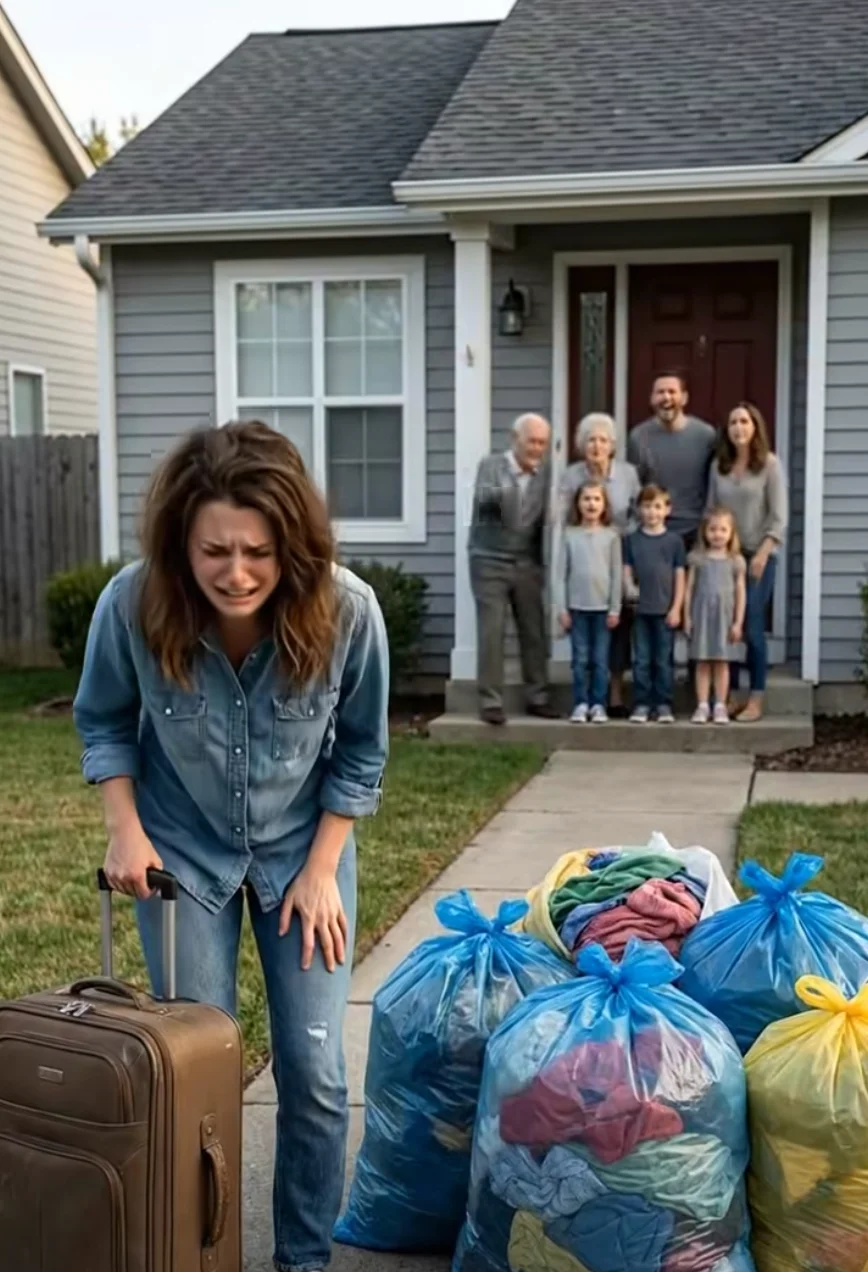
When I returned from my trip to Seattle, the sun was just beginning to set, casting long, bruised shadows across the suburban lawn I had mowed for the last two years. I expected to see the porch light flickering—a sign my father meant to fix but never got around to. Instead, I saw black plastic. Dozens of heavy-duty trash bags were piled in a haphazard mountain on the grass, looking like jagged teeth against the green.
Attached to the handle of my vintage suitcase, which sat atop the pile like a cherry on a sundae of garbage, was a note written in Sharpie: “If you want to stay, live in the basement.”
My name is Zoya, and at 29 years old, I stood on the precipice of a decision that would redefine my entire existence. But to understand the sheer audacity of that note, you have to understand how I ended up back in my childhood driveway, staring at the wreckage of my life.
Two years prior, my life was a picture of modern independence. I was a senior software developer, renting a chic, loft-style apartment in the city, driving a decent car, and enjoying the silence of solitary living. Then came the call that every adult child dreads.
“Zoya, we need to talk,” my mother said, her voice thin and brittle, like dry leaves.
When I arrived at the house—the beige two-story colonial where I’d scraped my knees and had my first kiss—the atmosphere was thick with unspoken panic. My father, a man of pride and few words, looked shrunken. He sat at the kitchen table, surrounded by a sea of overdue notices and red-inked bank statements.
“I had to quit, Zoya,” Dad whispered, staring at his calloused hands. “The back pain… I can’t haul lumber anymore. And nobody hires a 58-year-old foreman with a bad spine.”
Mom was weeping softly. “The mortgage is $1,800 a month. I’m only bringing in $1,200 part-time at the grocery store. We’re three months behind. They’re going to take the house.”
They didn’t have to beg. The ghosts of my childhood were in the walls, in the scuff marks on the floorboards. I looked at the kitchen island where I’d learned to bake, and the decision made itself.
“I’ll help,” I said. “I’ll move back in. I’ll cover the mortgage and the bills until you guys get back on your feet.”
It was supposed to be temporary. I gave up my loft, packed my life into boxes, and reclaimed my childhood bedroom. I set up my high-performance rig, upgraded the house’s internet to fiber-optic speeds, and settled into a routine.
My base salary was $85,000—solid, but not extravagant given the cost of living. However, my family didn’t know about the structure of my compensation. I worked for a startup that specialized in proprietary algorithms. My base was the tip of the iceberg. The real wealth came from performance bonuses and acquisition percentages. When we sold a module to a major tech giant, I got a cut. Some months, I banked an extra $15,000.
I kept the bonuses secret. It was a survival instinct. I deposited every cent of those windfalls into a high-yield savings account that didn’t send paper statements to the house. I paid the mortgage, the utilities, the car insurance, and filled the fridge with premium groceries using my base salary. It was tight, but manageable.
For a while, things were peaceful. But peace in my family was always a fragile ecosystem, easily disrupted by the apex predators: my older brother, Marcus, and his wife, Sandra.
They lived across town but treated my parents’ house—my house, effectively—as their weekend resort. Every Sunday, they would descend upon us. Marcus, a man who had turned “between jobs” into a career path, would raid the fridge I stocked. Sandra, however, was the true architect of my misery.
“Zoya, is that the same hoodie you wore last week?” Sandra asked one Sunday, picking at her salad with manicured nails. “You make good money now, don’t you? You dress like a college student who just rolled out of bed.”
Marcus chuckled, his mouth full of roast beef I had paid for. “She’s a coder, babe. They don’t have style. They have ‘comfort’.”
“It’s about self-respect,” Sandra sniffed, smoothing down her dress—a designer piece she had likely bought after borrowing money from me. “You need to invest in quality pieces. You’ll never find a husband looking like a vaguely depressed teenager.”
I usually just bit my tongue, excused myself, and retreated to my room. I’d hear them downstairs, the clinking of silverware and the low hum of gossip.
“She’s so antisocial,” Sandra’s voice would drift up the vents. “Living here rent-free, you’d think she’d make more of an effort to be part of the family.”
Rent-free. The irony tasted like copper in my mouth. They had no idea I was the only thing standing between them and a foreclosure sign.
I kept my head down and watched my secret account grow. $50,000. $100,000. By the two-year mark, I had nearly $180,000 saved. I was quietly browsing real estate listings, dreaming of a place with floor-to-ceiling windows and a door that locked from the inside.
I was patient. I was calculating. But I wasn’t prepared for the coup d’état that was brewing while I slept.
I decided to take a rare weekend off to visit my friend Jessica at her country house. For forty-eight hours, I breathed fresh air and didn’t think about mortgages or Sandra’s snide comments. I drove back on Sunday evening, relaxed and recharged, ready to tackle a new coding sprint.
As I pulled into the driveway, I saw the cars. Not just Marcus’s beat-up sedan, but a moving truck. The lights in the house were blazing.
I walked through the front door and froze. The living room was a war zone of cardboard boxes, plastic toys, and suitcases. My nephews, Tommy and Emma, were sprinting in circles, screaming at the top of their lungs.
And there, standing in the center of the room like a general surveying conquered territory, was Sandra.
Chapter 2: The Hostile Takeover
“What is going on?” I asked, dropping my overnight bag. The thud was swallowed by the chaos.
My parents emerged from the kitchen. My mother was wringing a dish towel in her hands, refusing to meet my eyes. My father looked at the floor, suddenly fascinated by the grout.
“Hey, sis!” Marcus popped up from behind a stack of boxes, grinning as if this were a surprise party. “Change of plans. The landlord raised our rent again, and honestly, with me being let go last week… we had to move.”
I felt a cold dread coil in my stomach. “Move? Move where?”
“Here, silly,” Sandra said, stepping forward. Her smile didn’t reach her eyes; it was a baring of teeth. “We’re family. Family helps each other.”
“This house is three bedrooms,” I said, my voice rising. “Mom and Dad are in the master. I’m in the second. Where are four of you going to sleep?”
Sandra’s smile widened. “We’ve already figured it out. The boys need space. They’re growing, Zoya. So, we put their things in the second bedroom.”
I blinked, processing the words. “The second bedroom? My bedroom?”
“It has the best light,” Sandra shrugged. “And it’s the biggest. You’re just one person. We moved your stuff to the small guest room at the end of the hall. It’s cozy.”
“You moved my things?” I stepped toward her. “You went into my room, touched my equipment, and moved me without asking?”
“We didn’t have a choice!” Marcus interjected, stepping between us. “The movers were here. We had to act fast. Don’t be so dramatic, Zoya.”
I looked at my parents. “Did you agree to this?”
“Zoya, please,” Dad said, his voice weary. “It’s your brother. His children. They have nowhere else to go. It’s just for a little while.”
“I work from that room,” I said, trying to keep the tremble out of my voice. “My server setup is there. My hardwired connection. I can’t just work from a guest room with spotty Wi-Fi.”
“Oh, prioritize, Zoya!” Sandra snapped. “Children’s welfare comes before your little computer games. You can work from a coffee shop if it’s that big of a deal.”
“I pay the mortgage,” I said, the words cutting through the noise. “I pay the electric bill that powers those lights. I pay for the food you’re going to eat. I am not a guest here.”
The room went silent. Sandra’s face flushed a blotchy red.
“Well,” she hissed. “If you’re going to hold money over our heads, maybe you’re not the saint you think you are. We are in crisis, and you’re worried about an Ethernet cable. You’re selfish, Zoya. Deeply selfish.”
I stormed up the stairs. My room—my sanctuary—was gone. My desk was dismantled, shoved into the hallway. My bed was replaced by bunk beds. The small guest room at the end of the hall was a cramped box filled with my hasty piled belongings.
That night, I lay on the lumpy mattress in the guest room, listening to the muffled sounds of Sandra and Marcus laughing in the room that I paid for. I realized then that this wasn’t a temporary arrangement. This was an invasion.
The next two months were a descent into hell. The house, once quiet during the day, became a playground. Marcus spent his days on the living room couch, watching TV at max volume while I tried to debug code. The kids treated my door like a drum set.
But the breaking point wasn’t the noise. It was the sabotage.
I was working on a critical project—a security patch for a major client. The deadline was tight. I had explicitly asked Marcus to keep the kids out of the hallway for two hours while I ran a deployment script.
Thirty minutes in, my connection died. Not a lag. A hard drop.
I checked the router app on my phone. Offline.
I ran downstairs. The router sat on the hallway table. The Ethernet cable that ran up to my new, makeshift office had been severed. Cleanly snipped.
I stood there, the cut wire in my hand, shaking with rage. I walked into the living room where Sandra was filing her nails while the kids threw LEGOs at the cat.
“Who cut the wire?” I demanded.
Sandra glanced up, bored. “Oh. Tommy was playing ‘repairman’ with the scissors. He didn’t mean to. He’s five, Zoya.”
“He had scissors? Unsupervised?”
“I was right here,” she snapped. “Stop acting like he burned the house down. It’s a ten-dollar wire. Go buy another one.”
“I have a deadline in twenty minutes!” I yelled. “This isn’t about the wire. It’s about respect!”
“Don’t you dare yell at me in front of my children,” Sandra stood up, getting in my face. “You think because you throw some money at your parents, you own us? You’re bitter because you have no life, no husband, and no kids. You’re jealous.”
I looked at Marcus for support. He just turned up the TV volume. I looked at my mom, who was folding laundry in the corner. She just looked sad and looked away.
That’s it, I thought. The contract is broken.
I drove to the electronics store, bought a new cable, and finished my work at a Starbucks. That evening, I didn’t eat dinner with them. I sat in my car and checked my bank account.
A pending deposit had just cleared. The quarterly bonus. A big one. My software module had been licensed to a Fortune 500 company. The deposit was for $62,000.
My savings now sat at nearly $240,000.
I pulled up my contacts and called Dave, an old college friend who was now a shark of a real estate agent.
“Zoya!” Dave answered. “Long time. What’s up?”
“I need a place, Dave. Fast. I need something quiet, secure, and ready to move in. Budget is healthy. No mortgage contingencies. Cash.”
“I have a pocket listing,” Dave said, his tone shifting to professional excitement. “Downtown condo. Two bedrooms, soundproofed, concierge security. The seller wants a quick close.”
“Show it to me tomorrow,” I said.
Three weeks later, I signed the papers. I owned a condo. It was beautiful—sleek, modern, and utterly silent. I had the keys in my pocket. But I didn’t tell a soul. Not yet.
My boss called the next day. “Zoya, the annual dev conference is in Seattle next week. I know it’s short notice, but I want you to lead the workshop on the new security protocols. All expenses paid, two weeks at the Four Seasons.”
Two weeks away from the madhouse. Two weeks to plan my extraction.
“I’m in,” I said.
When I told the family I was leaving for a work trip, the relief on their faces was palpable. They were happy to have me gone so they could fully claim the space.
“Have fun,” Sandra said dismissively, not looking up from her phone. “Try to buy some decent clothes while you’re there.”
I left for Seattle. The conference was a blur of success and networking, but my mind was constantly back at that house. I didn’t call them. They didn’t call me. The silence confirmed everything I needed to know. I was an ATM to them, nothing more.
Then, the flight home landed. I took a taxi, feeling a strange mixture of dread and anticipation. As the taxi turned onto my street, the driver slowed down.
“Is that… your stuff?” he asked.
I looked out the window. And there it was. The black plastic mountain.
Chapter 3: The Basement Option
I stood on the lawn, the damp grass soaking into my sneakers, staring at the note. “If you want to stay, live in the basement.”
The front door opened. The whole clan stepped out onto the porch. My parents, looking guilty but resolute. Marcus, looking smug. Sandra, looking triumphant.
“What is this?” I asked, gesturing to the garbage bags containing my wardrobe, my books, my life.
“We had a family meeting while you were gone,” Sandra announced, crossing her arms. “We realized the current arrangement just wasn’t working. The guest room is too small for you, and honestly, having you in the main hallway is disruptive to the children’s sleep schedule.”
“So you threw my things on the lawn?”
“We cleared out the basement for you,” Marcus said, pointing to the narrow, cobweb-filled window at ground level. “It’s private. You can have the whole down-there space. We even put a rug down.”
The basement. It was unfinished. It smelled of mildew and wet earth. It flooded every time it rained hard. There was no heat.
“And if I don’t want to live in a cellar?” I asked, my voice calm, dangerously calm.
“Then you’re free to leave,” Sandra said, a cruel glint in her eye. “You’re 29, Zoya. It’s embarrassing that you’re still clinging to your parents’ apron strings. If you don’t like the rules of the house, find your own roof.”
I looked at my father. “Dad? You’re okay with this? You want me to live in the basement while they take my room?”
Dad sighed, rubbing his neck. “Zoya, honey, it’s just… for the sake of peace. Sandra says the tension is bad for the kids. The basement is… it’s spacious.”
They thought they had me trapped. They thought I had nowhere to go. They thought I would beg, cry, and eventually drag my bags down the creaky stairs into the dark, grateful for the scraps they threw me. They assumed that because I had been compliant for two years, I was weak.
But they didn’t know about the keys in my pocket. They didn’t know about the $240,000.
A strange sensation washed over me. It wasn’t anger anymore. It was pure, crystalline clarity. The tether that held me to this family—the guilt, the obligation, the hope for love—snapped.
I smiled. A bright, genuine, terrifying smile.
“You know what?” I said, my voice cheerful. “You are absolutely right, Sandra.”
Sandra blinked, her smug expression faltering for a microsecond. “I am?”
“Completely,” I said. “I’m almost thirty. I shouldn’t be living with my parents. It is time I stood on my own two feet.”
I pulled out my phone.
“What are you doing?” Marcus asked, suspicious of my sudden compliance.
“Calling a moving truck,” I said. “I’ll get my things out of your sight immediately.”
“Oh,” Mom said, looking suddenly anxious. “You don’t have to leave tonight, Zoya. The basement is ready…”
“No, no,” I waved her off. “Sandra’s right. I need to go. But just one question before I leave.”
I looked at them, measuring the weight of the bomb I was about to drop.
“How exactly do you plan to pay the mortgage next week? And the electricity? And the water?”
Marcus puffed out his chest. “I got a job. Started three days ago. Sales. Huge commission potential. We don’t need your charity anymore.”
“Fantastic!” I clapped my hands. “That is wonderful news, Marcus! I was so worried about leaving Mom and Dad in a bind, but if you’ve got it covered, then my conscience is clear.”
I walked over to the pile of bags. “Well, this works out perfectly for everyone.”
The moving truck arrived forty minutes later. I had requested an emergency pickup, and money talks. The movers were efficient. They loaded the black bags. They went into the garage and grabbed my bike.
My family stood on the porch, watching. They looked confused. They had prepared for a fight, for tears, for drama. They didn’t know how to handle a graceful exit.
As the truck engine rumbled to life, I walked to my car.
“Goodbye,” I said. I didn’t hug them. I didn’t look back.
I drove away, watching the house disappear in my rearview mirror. I felt lighter than air. I drove straight to my condo, parked in my reserved underground spot, and took the elevator up to the 15th floor.
I unlocked the door. The apartment was cool, smelling of fresh paint and silence. I walked to the floor-to-ceiling windows and looked out at the city lights.
I was free.
The first thing I did was sit down at my granite kitchen island and open my banking app. I cancelled the recurring transfer for the mortgage. I cancelled the electric bill auto-pay. I cancelled the water, the gas, the internet, and the insurance.
One by one, I severed the financial arteries that had kept that house alive.
I blocked their numbers. I blocked them on social media. I told the concierge downstairs that under no circumstances was anyone with my last name allowed up.
Then, I ordered a pizza, poured a glass of wine, and slept for twelve hours straight.
Chapter 4: The Silence
Months passed. They were the best months of my life.
I was promoted to Lead Architect at work. My salary bumped up to six figures, not including the bonuses. I started dating Julian, a structural engineer I met at a coffee shop. He was kind, quiet, and had his own life together. We cooked dinner together. We went hiking. He never asked to borrow money.
I wondered, sometimes, about the house. I knew the timeline of foreclosure. I knew how banks worked. Without my payments, the mortgage would be delinquent in thirty days. Default in ninety. Foreclosure proceedings would start shortly after.
Marcus’s “huge commission” job was likely a fantasy, or at best, a door-to-door gig that wouldn’t cover a fraction of the $1,800 mortgage plus the utilities for six people.
But I didn’t check. I didn’t ask. I protected my peace.
Until one rainy Tuesday evening in November.
I was chopping vegetables for a stir-fry, Julian pouring wine, when the buzzer rang.
I frowned. I wasn’t expecting delivery. I walked to the intercom.
“Yes?”
“Miss Zoya,” the concierge’s voice crackled. “There are some people here to see you. They say they are your family. They’re… quite insistent.”
My stomach dropped. How did they find me? I had been so careful. Then I remembered Jessica. My friend Jessica, who had a big heart and a loose tongue. She must have let it slip.
“Don’t let them up,” I said.
“They’re causing a bit of a scene in the lobby, Ma’am,” the concierge whispered. “The woman is crying.”
I sighed. I looked at Julian. “I have to deal with this.”
“Do you want me to come?” he asked, setting down his glass.
“No. I need to do this alone.”
I went down to the lobby. The elevator doors opened, and there they were.
They looked rough. Dad looked ten years older. Mom’s hair was unkempt. Marcus looked exhausted. And Sandra… Sandra looked furious, but underneath the anger, there was panic.
When they saw me, Sandra marched forward. She took in the marble floors of the lobby, the art on the walls, and my cashmere sweater. Jealousy radiated off her like heat waves.
“Nice place,” she spat. “Must cost a fortune. While your family is out on the street.”
“How did you find me?” I asked coldly.
“Jessica,” Marcus said. “Look, Zoya, we need to talk.”
“We have nothing to talk about. You told me to leave. I left.”
“We lost the house,” Mom sobbed, stepping forward. “The bank took it. We were evicted yesterday. We’re staying at a Motel 6, Zoya. It’s horrible.”
I felt a twinge of sadness for the house, for the childhood memories, but it was distant, like reading about a tragedy in a newspaper.
“I assumed that would happen,” I said. “What happened to Marcus’s job?”
Marcus looked at his shoes. “It… didn’t work out. Commission only. It was a scam.”
“So,” I crossed my arms. “What do you want?”
“We need a place to stay,” Dad said, his voice breaking. “Just until we get on our feet. We can’t live in a motel.”
“We’re family,” Sandra chimed in, her tone shifting from aggressive to wheedling. “You have two bedrooms here, right? We can make it work. The kids can sleep in the living room.”
I stared at her. The sheer, unadulterated delusion was breathtaking.
“You want to move in with me?” I asked, letting the incredulity color my voice. “Here? After you threw my clothes on the lawn? After you cut my internet? After you told me to live in a dark, moldy basement?”
“That was a misunderstanding,” Marcus said quickly. “We were stressed. We didn’t mean it.”
“You meant every word,” I said. “You told me I was selfish. You told me I needed to stand on my own two feet. Well, here I am. Standing.”
“Zoya, please,” Mom begged, reaching for my hand. I pulled back. “Where are we supposed to go?”
“I don’t know,” I said honestly. “But you are not coming up to my apartment.”
Sandra’s face twisted. The mask fell. “You are a cold-hearted bitch, Zoya! We are your blood! You’re going to let your nephews sleep in a motel?”
“You are the parents,” I said, my voice hard as steel. “Their welfare is your responsibility. Maybe you should sell some of your ‘quality pieces’ to pay for rent.”
I turned to the concierge, who was watching with wide eyes. “Please ask them to leave. If they refuse, call the police.”
“Zoya!” Dad yelled. “Don’t do this!”
I stepped back into the elevator. “You did this,” I said as the doors began to slide shut. “You chose Sandra and Marcus over the daughter who was saving you. You made your choice on the lawn that night. Now you have to live with it.”
The doors closed on their shouting faces.
Chapter 5: The Aftermath
I rode the elevator up in silence. My heart was pounding, but my hands were steady.
When I walked back into the apartment, Julian was waiting. He didn’t ask what happened. He just handed me a glass of wine and pulled me into a hug.
“Is it over?” he asked.
“Yes,” I said, resting my head on his chest. “It’s finally over.”
I heard through the grapevine later what happened. My parents moved into a tiny, one-bedroom apartment subsidized by the state. Marcus and Sandra had to move in with Sandra’s parents, who were apparently even less tolerant than I was. I heard Sandra was actually working a retail job now.
I never spoke to them again.
It sounds harsh, I know. People tell me, “But it’s family.” They don’t understand. Biology is an accident; family is a choice. You choose people who treat you with respect. You choose people who don’t mistake your kindness for weakness.
I sit in my condo now, with the sun streaming through the floor-to-ceiling windows, illuminating the life I built for myself. I am safe. I am successful. And for the first time in my life, I am not being eaten alive by the people supposed to love me.
The basement was a threat, they thought. But really, it was the push I needed to find the penthouse.
If you want more stories like this, or if you’d like to share your thoughts about what you would have done in my situation, I’d love to hear from you. Your perspective helps these stories reach more people, so don’t be shy about commenting or sharing.